Top Low-Maintenance Plants for Northeast Ohio Properties
Adam Mullen
Blog
Imagine stepping outside each morning and feeling genuine pride in your outdoor space. There would be no stress about watering schedules, no panic about brown patches, and no weekend plans hijacked by urgent landscaping tasks. This dream is becoming reality for smart Northeast Ohio homeowners who’ve discovered the secret to effortless curb appeal.
You know that feeling when landscaping seems like an impossible mountain to climb? The weather changes constantly, time is scarce, and you just want to relax in your outdoor space instead of constantly fixing it. The good news is there’s a solution that works with your lifestyle, not against it.
Table of Contents
Dealing with Northeast Ohio’s Weather Reality
Here’s the truth about our local climate—it’s challenging. Northeast Ohio delivers freezing temperatures that plummet to negative territory, then switches to sticky, humid summers that test even hardy plants. Throw in unexpected late frosts and random dry spells, and you understand why plant selection is crucial.
What plants thrive in the Northeast Ohio climate? Success comes from choosing species that actually enjoy our USDA zones 6a-7b conditions. Native plants and regionally adapted varieties excel because they’ve spent generations learning to handle everything our weather throws at them.
Success means selecting plants that thrive in our conditions rather than merely surviving them. This approach transforms maintenance from a constant battle into occasional, simple care.
Native Plants That Deliver Consistent Results
Black-Eyed Susan: The Consistent Performer
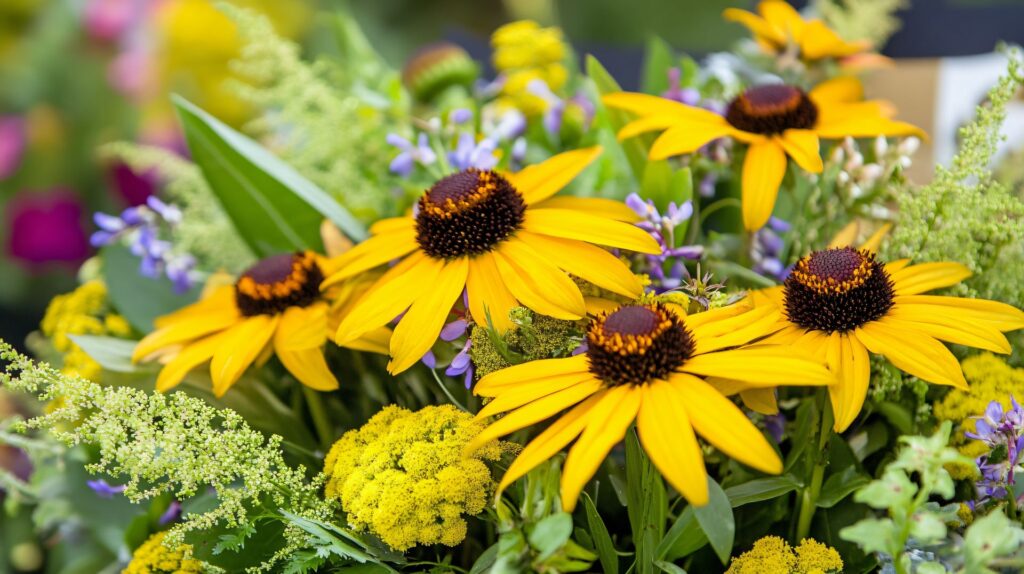
Think of Black-Eyed Susans as your most reliable landscaping investment. These cheerful yellow blooms with distinctive dark centers provide color from mid-summer until fall while attracting beneficial butterflies. Once they settle in, they manage drought conditions effortlessly and return more robust each season.
Give them full to partial sun, water well during their first growing season, then enjoy watching them flourish independently. Their natural spreading habit fills empty spaces, preventing weeds from taking hold.
Purple Coneflower: Wildlife’s Favorite
Looking to create a habitat while minimizing work? Purple Coneflowers deliver both. These sturdy perennials offer gorgeous pink, purple, or white blooms that serve as magnets for butterflies and bees. They handle dry conditions once established and typically avoid deer damage.
The tall stems and distinctive seed heads create winter appeal, so you can leave them standing for seasonal interest instead of immediate cleanup.
Blazing Star: Bold Beauty Made Simple
For homeowners wanting a dramatic impact, Blazing Star provides tall purple flower spikes that resemble natural fireworks. These native perennials draw butterflies and hummingbirds all summer while demanding minimal attention once established.
Plant them in soil that drains well, provide full sun exposure, and watch them create an impressive display year after year.
Timing Your Planting for Maximum Success
Spring Opportunities (March-May)
Spring offers the ideal window for establishing low-maintenance plants. Since we’re currently in late May, you’re perfectly positioned for planting success. Consider these options:
Hostas for Shaded Spaces: Ideal for areas beneath trees or along north-facing walls. These foliage perennials flourish in limited light while creating dense, attractive coverage with minimal input.
Daylilies for Flexibility: Though individual flowers last only one day, each plant generates numerous buds for extended blooming. They adapt to full sun or partial shade and flower from early summer into fall.
Summer Options (June-August)
Summer planting demands more initial watering attention, but these varieties establish successfully:
Sedum Types: These succulent perennials retain water in their foliage, creating exceptional drought tolerance. They offer diverse colors and sizes while producing star-shaped blooms that benefit pollinators.
Catmint: This silvery-green perennial creates lavender-blue flowers and fragrant leaves. It succeeds in full sun to partial shade and develops drought resistance once established.
Fall Advantages (September-November)
Fall actually provides excellent perennial planting conditions, with cooler temperatures reducing stress while root growth continues:
Hellebores: These shade-preferring perennials flower in late winter, delivering color when other plants remain dormant. They demonstrate exceptional resistance to pests and diseases.
Chrysanthemums: Commonly called ‘mums,’ these hardy perennials provide fall color in shades from white to rich burgundy.
Smart Design Strategies for Easy Care
Using the “Thriller, Filler, Spiller” Approach
This design concept creates attractive plant groupings effortlessly:
Thriller: A striking focal element like ornamental grass or compact shrub
Filler: Medium-height plants such as coral bells or catmint
Spiller: Ground-covering plants like creeping thyme
Building Effective Layers
Develop visual depth through strategic layering: position tall plants behind, medium heights in the center, and low plants plus ground covers in front. This method maximizes visual appeal while ensuring proper light access for each plant.
Matching Plant Requirements
Group plants with comparable water and light needs together. This strategy simplifies care significantly and eliminates the challenge of meeting different requirements within the same area.
Selecting Drought-Resistant Plants for Your Space
Which landscaping plants require the least maintenance? Drought tolerance often determines the answer. These varieties consistently perform well:
Yarrow: The Resilient Color Provider
Yarrow creates flat flower clusters in yellow, white, pink, or red shades. It flourishes in full sun, manages drought conditions, and blooms from early summer through fall. The delicate foliage provides texture even between flowering periods.
Russian Sage: The Easy Lavender Alternative
If you appreciate lavender’s appearance but prefer something simpler, Russian Sage fits perfectly. It produces purple flowers on silvery-white stems and actually prefers drier soil once established.
Coreopsis: Bright Blooms Without Effort
Known as tickseed, Coreopsis generates vibrant yellow, gold, or pink flowers from early summer until fall. These sun-loving perennials tolerate drought while attracting butterflies and beneficial pollinators.
Advantages of Professional Plant Selection
While homeowners can successfully select and install low-maintenance plants, professional landscapers provide valuable benefits:
Regional Knowledge
Landscaping professionals understand local microclimates, soil variations, and area-specific challenges. They know which plants excel in your neighborhood’s particular conditions.
Complete Design Planning
Professionals create unified designs that complement your home’s style and existing landscape elements. They understand mature plant sizes and plan for long-term growth patterns.
Investment Protection
Though professional services require upfront costs, expert installation typically saves money over time by preventing expensive mistakes and ensuring successful plant establishment.
Ongoing Care Coordination
Professionals develop maintenance programs that keep your low-maintenance landscape performing optimally with minimal ongoing effort from you.
Actionable Steps for Success
Begin with Focused Areas
Avoid feeling pressured to redesign your entire property immediately. Start with one section, master your technique, then apply your success to additional areas.
Prepare Your Soil Properly
Even low-maintenance plants benefit from quality soil preparation. Test your soil’s pH and drainage characteristics, then improve as necessary before planting.
Apply Mulch Strategically
Spread 2-3 inches of organic mulch around plants to maintain moisture, prevent weeds, and stabilize soil temperature. This simple step significantly reduces maintenance requirements.
Water Thoughtfully During Establishment
Even drought-resistant plants require consistent moisture during their first year. Once established, they’ll need much less regular attention.
Taking Action This Growing Season
As late spring transitions into summer, this timing is perfect for beginning your low-maintenance landscaping project. Plants installed now benefit from the complete growing season to develop strong root systems before winter arrives.
Focus on strategic areas: your front entrance for immediate curb appeal, a problematic spot that’s been challenging, or a visible area where you’ll appreciate the results daily.
The objective isn’t achieving perfection—it’s developing an outdoor space you can genuinely enjoy instead of constantly maintaining. Each low-maintenance plant you add reduces your weekend obligation list.
Creating Your Low-Maintenance Success Story
Developing a beautiful, easy-care landscape in Northeast Ohio is both achievable and practical. By choosing climate-adapted plants and native species that support local wildlife, you can enjoy impressive outdoor spaces without sacrificing your weekends.
Success starts with planning for your specific conditions and maintenance preferences. Whether you tackle the project yourself or work with professionals, low-maintenance plants deliver long-term value. Ready to transform your property? Cleveland Outdoor Enhancements can help make your vision reality. Call (440) 202-9013 or email [email protected] to discuss your low-maintenance landscaping goals and discover how professional design creates the outdoor space you’ll love for years to come.